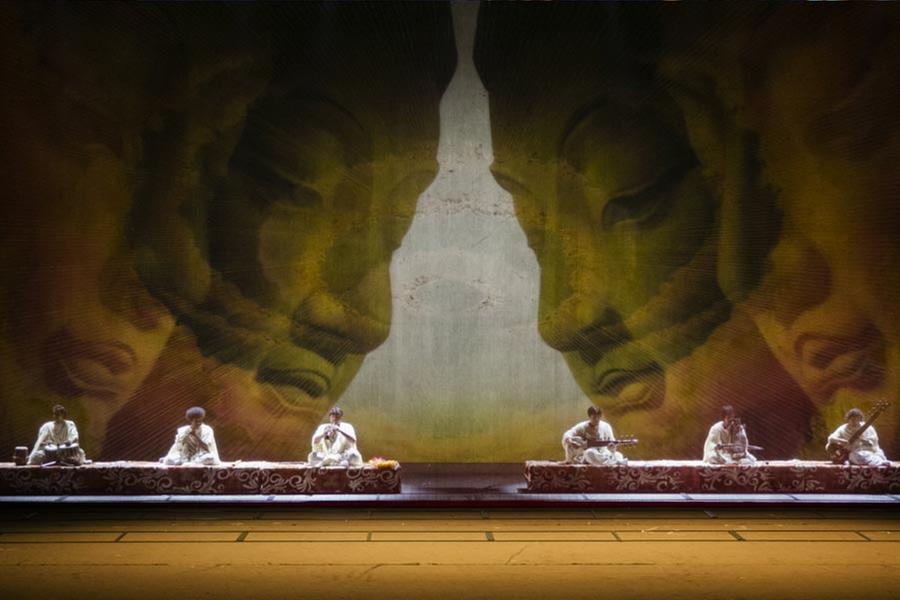
Pilgrimage to the West
Introduction
Pilgrimage to the West is a captivating folk instrumental play produced by the China National Traditional Orchestra in 2017. The production is a significant artistic endeavor that celebrates the rich tapestry of traditional Chinese music, featuring over 100 traditional Chinese instruments. The play is heavily inspired by the classic Chinese novel Journey to the West, which chronicles the legendary pilgrimage of Tang Dynasty (618-907) monk Xuanzang to Central Asia and India in pursuit of Buddhist sacred texts. This remarkable journey, filled with mythical encounters and trials, is reimagined through a fusion of traditional music from diverse cultures that thrived along the ancient Silk Road.
Background and Theme
At the heart of Pilgrimage to the West is the story of Xuanzang, a Tang Dynasty monk renowned for his adventurous pilgrimage to the West during the period of 618-907. His quest to obtain Buddhist sacred texts saw him traverse Central Asia and India, enduring numerous trials along the way. Unlike previous adaptations that often highlight the character of the Monkey King, this production emphasizes Xuanzang himself as the central figure, providing a fresh perspective on this legendary journey.
The production is not only a tribute to Xuanzang's journey but also a celebration of cultural diversity. It integrates the folk music of the Han people with musical influences from the Uygur ethnic group, the Kazak ethnic group, the Tajik ethnic group, and the Indian people. This harmonious blend showcases the rich cultural interactions that occurred along the Silk Road, reflecting a fusion of musical traditions that transcends geographical and cultural boundaries.
Musical Composition
The musical composition of Pilgrimage to the West is a testament to the ingenuity of composer Jiang Ying. Through meticulous orchestration and the use of traditional instruments, the play breathes life into the historical saga. Jiang Ying employs the dizi (bamboo flute) and the xiao (vertical flute) to depict the spiritual and philosophical essence of Xuanzang. The pipa, a four-stringed plucked instrument, is used to characterize the divine presence of the Goddess, while the konghou, a harp-like instrument, represents a Central Asian princess.
In addition to these instruments, the production skillfully incorporates musical elements from the cultures Xuanzang encountered on his journey. This includes Uygur melodies known for their rhythmic complexity, Kazak tunes with their distinctive harmonics, and Tajik and Indian musical motifs, which contribute to the play's vibrant auditory landscape. The result is a rich tapestry of sound that mirrors the diverse cultural encounters of Xuanzang's pilgrimage.
Production and Performance
Directed by Tsung Yeh, the music director of the Singapore Chinese Orchestra, Pilgrimage to the West is not only a sonic journey but also a visual spectacle. The production incorporates multimedia presentations that enhance the storytelling experience, providing audiences with an immersive blend of music, visuals, and narrative.
The play premiered at the Beijing Tianqiao Performing Arts Center and embarked on a nationwide tour, captivating audiences with its unique portrayal of Xuanzang's odyssey. Through its creative direction and theatrical innovation, Pilgrimage to the West offers a fresh interpretation of a classic tale, inviting viewers to experience the spiritual and cultural dimensions of Xuanzang's journey.
Cultural Significance
Pilgrimage to the West serves as a cultural bridge, connecting modern audiences with the historical and cultural heritage of ancient China. By highlighting the diverse musical traditions of the Silk Road, the play fosters an appreciation for cultural exchange and mutual understanding. It celebrates the enduring legacy of the Silk Road as a conduit of cultural interaction and showcases the timeless appeal of traditional Chinese music.








